 Save
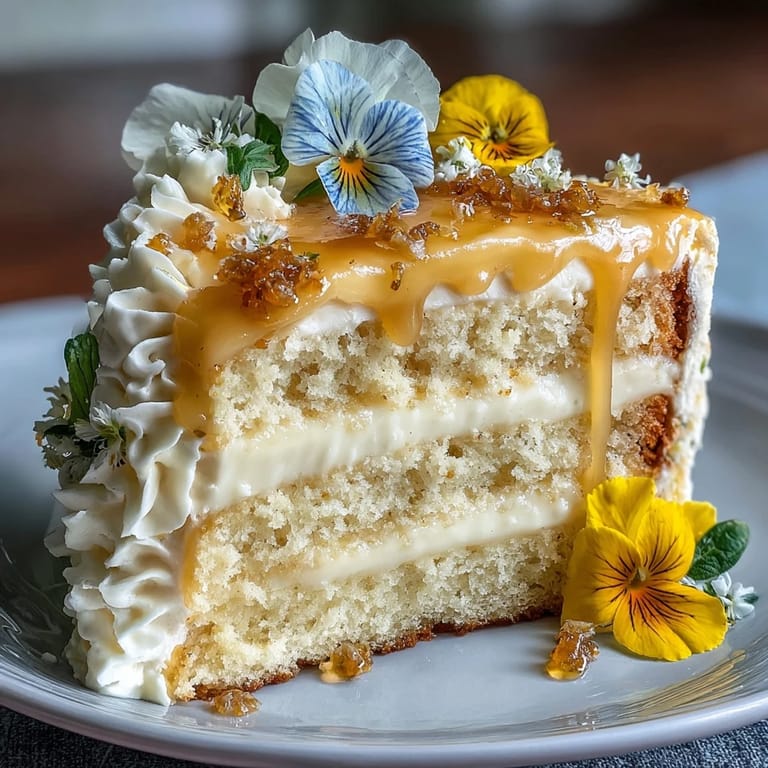
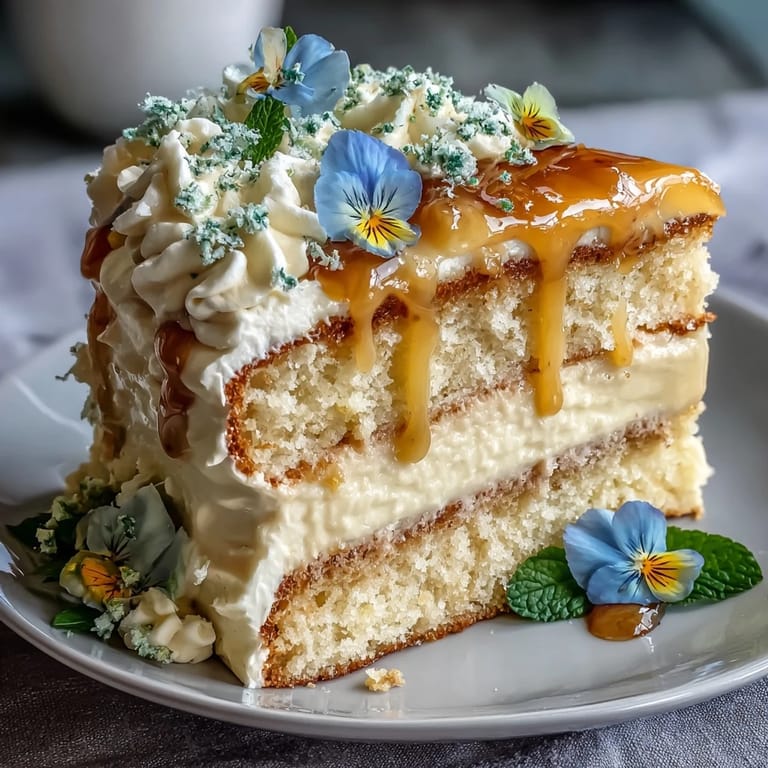
Save A couple of years ago, I caught the subtle scent of lemon drifting through my kitchen as I whisked together my first batch of homemade lemon curd—just as rain tapped gently against the window. That spark of citrus truly woke up the whole house, and I remember pausing midsentence on a phone call, suddenly preoccupied with imagining a cake that would do lemon proper justice. Creating this Lemon Curd Layer Cake for Mother's Day felt less like baking and more like building a little edible bouquet. It's a showstopper layered with tangy homemade lemon curd, blanketed in clouds of whipped cream, and finished with edible flowers—like setting a spring garden right onto a plate. Every year since, the whole process leaves me grinning long before the first forkful is tasted.
The first time I assembled this cake for Mother's Day brunch, my younger brother hovered nearby, peppering me with questions about edible flowers while snatching little pinches of whipped cream from the bowl. The kitchen was crowded but cozy, the air filled with a mix of zest and laughter, and we ended up naming which flower would match each family member—long before any candles were lit on the dessert.
Ingredients
- All-purpose flour: Choose unbleached for better texture, and be sure to spoon and level for accuracy—I learned this after my first cake turned out denser than expected.
- Baking powder and baking soda: Both are essential for perfect lift, so double-check expiration dates to avoid a flat cake.
- Salt: Just a pinch brightens the other flavors and balances sweetness beautifully.
- Unsalted butter: Room temperature is key—soft enough to cream easily and trap air, but not melted!
- Granulated sugar: Creaming this with butter until pale and fluffy makes all the difference in the cake's crumb.
- Eggs: Bring them to room temperature so they blend evenly into the batter—cold eggs can make things curdle.
- Lemon zest and juice: Freshly grated zest and squeezed juice add true zing, so buy lemons that feel heavy for their size.
- Vanilla extract: Adds warmth and depth behind the citrus—don't skip it even though it's subtle.
- Whole milk: Room temp milk means the batter won’t seize up or create uneven texture.
- Powdered sugar: For a cloud-like whipped cream, sift before using to avoid lumps.
- Heavy cream: Chill your bowl and beaters—cream whips to stiff peaks so much faster that way.
- Edible flowers: Use food-grade, freshly picked, or reputable sources; my favorites are pansies and violas for color and mild taste.
Tired of Takeout? 🥡
Get 10 meals you can make faster than delivery arrives. Seriously.
One email. No spam. Unsubscribe anytime.
Instructions
- Prepare the pans and preheat:
- Grease and line three 8-inch cake pans, then let your oven warm up while you start on the batter—it makes the blending feel like part of a rhythm.
- Mix dry ingredients:
- Whisk the flour, baking powder, baking soda, and salt in a bowl until combined; the smell of flour always reminds me something good’s about to happen.
- Cream butter and sugar:
- Beat the butter and sugar until they reach a pale, fluffy state—if you listen closely, it sounds a bit like snow crunching underfoot.
- Add eggs and flavor:
- Crack in the eggs one at a time, beating in zest, lemon juice, and vanilla; it’ll look a little curdled, but that's perfectly normal.
- Combine with flour and milk:
- Add dry ingredients in three rounds, alternating with the milk—go gently so the cake stays airy and tender.
- Bake the cakes:
- Divide the batter evenly, smoothing the tops, and bake until golden and a toothpick comes out clean; you'll know they're done when they give off that sweet, almost candy-like aroma.
- Cool completely:
- Let the cakes rest in their pans before turning out to fully cool—impatience here means a sticky, broken layer (I've been there).
- Whisk up lemon curd:
- In a saucepan, gently whisk eggs, sugar, lemon zest and juice, and cook until thickened; stirring constantly is key and the transformation happens in a flash.
- Add butter to curd and chill:
- Remove from heat, stir in the butter for silkiness, and press plastic wrap directly on the surface to avoid that weird skin.
- Make whipped cream frosting:
- Beat cold heavy cream, powdered sugar, and vanilla until stiff peaks form—it’s like sculpting clouds in a bowl.
- Assemble the layers:
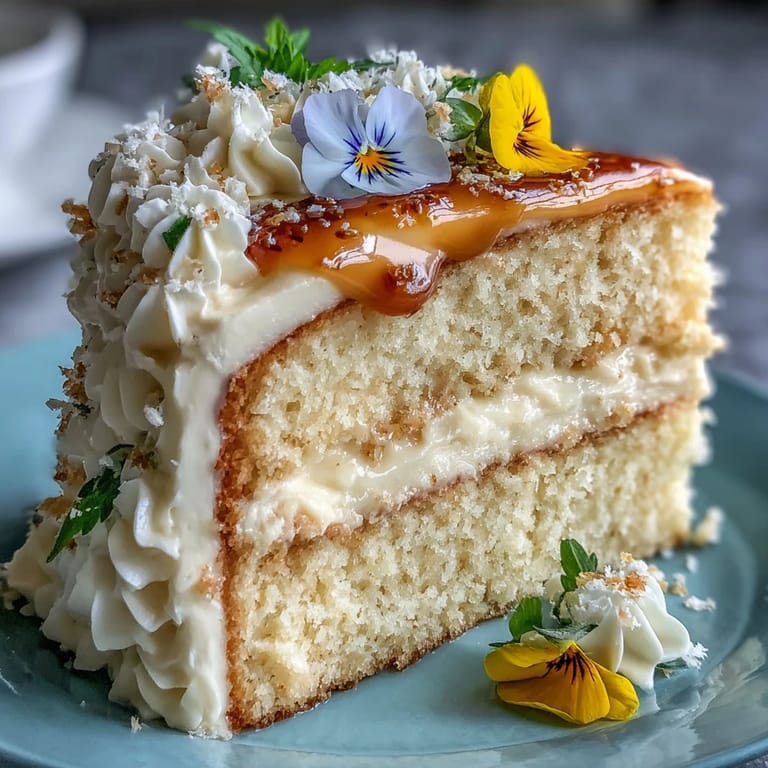
- Layer cake, cream, and lemon curd in turns, finishing with whipped cream all over; don’t fret if some curd peeks through, it adds character.
- Decorate with flowers:
- Arrange edible flowers just before serving, pressing them gently onto the cream—this part always feels a little like crafting a bouquet.
 Save
Save I’ll never forget watching my mom’s reaction as she cut into the cake and bright yellow lemon curd peeked between the layers—she immediately insisted on a second slice, slowly savoring each bite while tracing the petals on top with her fork. That moment turned a simple dessert into a cherished tradition that now marks every spring in our family.
Choosing and Using Edible Flowers
The first time I garnished this cake, I spent nearly as long picking the perfect pansies from my garden as I did baking. Not only do the right flowers add color and intrigue, but the subtle difference between a slightly peppery nasturtium and a sweet viola can make each mouthful unique. Always look for flowers that are freshly picked, pesticide-free, and intended for culinary use—never grab them straight from a florist bouquet. Give them a gentle rinse and fully pat dry before arranging so they don’t wilt on the whipped cream. If children help decorate, let them pick their favorites but be sure each flower is safe to eat first.
Making Lemon Curd from Scratch
I used to buy jarred lemon curd until a friend challenged me to try making it myself one lazy Saturday. Whisking nonstop might sound tedious, but as the mixture thickened and became silky overnight in the fridge, I was converted. Use a heavy-bottomed saucepan to avoid scorching and stir with a silicone spatula to reach every corner. The trickiest part is knowing when it's thick enough—it should coat the back of a spoon but still look brilliantly glossy. Once you pour it into a bowl, press wrap directly onto the surface to keep it smooth and soft.
Tips for Picture-Perfect Assembly
A little planning goes a long way toward a beautiful final cake, even if you're not a frosting expert like me. I always level the cakes gently with a serrated knife to keep the layers neat and stackable. If the lemon curd threatens to ooze out the sides, pipe a small ring of whipped cream as a barrier before spreading it in the center. Work quickly but gently with the edible flowers—they look prettiest arranged just before serving so they stay bright.
- Let the lemon curd chill until very firm, or your layers might slide.
- Make extra whipped cream—leftovers never go to waste!
- Have a damp cloth nearby for quick clean-ups when frosting.
 Save
Save However you decorate it, this Lemon Curd Layer Cake is a gentle reminder that sometimes the prettiest desserts are brimming with bright flavor and a few unforgettable moments shared in the kitchen. I hope it brings as much sunshine to your table as it has to ours.
Recipe Questions & Answers
- → How do I know when the lemon curd has thickened enough?
The curd will coat the back of a spoon and leave a clear trail when you run your finger through it. Cook gently over medium heat while stirring constantly to avoid scrambling the eggs.
- → Can I make the cake layers ahead of time?
Yes. Bake and cool the layers completely, then wrap tightly and refrigerate for up to 24 hours or freeze for longer storage. Fill and assemble once the curd is chilled and the whipped cream is freshly whipped.
- → How can I keep whipped cream stable between assembly and serving?
Chill the bowl and beaters before whipping. Use very cold cream and beat to stiff peaks. For extra stability, fold in a small amount of mascarpone or a stabilizer like gelatin or instant pudding mix if desired.
- → Are all edible flowers suitable for decorating?
Only use food-safe, pesticide-free flowers. Common choices here are pansies, violas, nasturtiums, and certain rose petals. Always verify the source and avoid flowers not labeled as edible.
- → How do I prevent the layers from drying out?
Brush the sponge lightly with a lemon sugar syrup or a simple syrup flavored with lemon juice before layering. This adds moisture and enhances the lemon flavor without making the cake soggy.
- → Can I add berries between the layers?
Yes. Fresh berries like raspberries or blueberries pair well with lemon curd. Layer them sparingly to avoid excess moisture; consider tossing berries with a little powdered sugar to macerate briefly before adding.