 Save
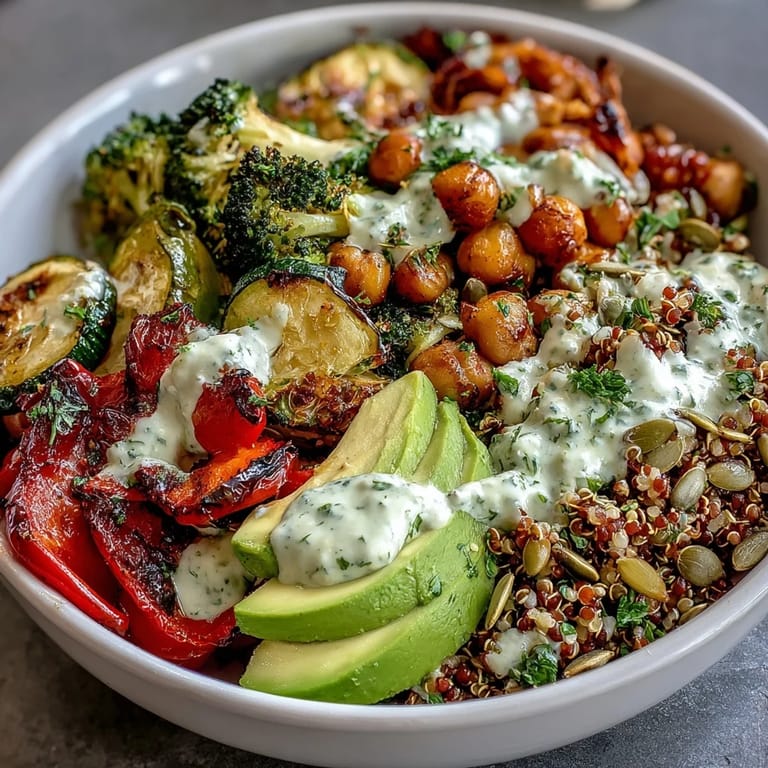
Save My cousin showed up at my apartment on a Tuesday afternoon with a half-empty container of leftover roasted vegetables and challenged me to make something exciting from them. I had some grains in the pantry, a can of chickpeas, and suddenly this bowl came together—vibrant, satisfying, and ready in under an hour. That day taught me that the best meals don't require a grocery list of obscure ingredients; they just need layers of texture, color, and care.
I made this for a friend who'd just started cooking vegetarian, and watching her realize that legumes and grains together create complete protein was a small victory I didn't expect to celebrate over lunch. She kept saying it didn't feel like health food, which I think is the highest compliment any nourishing dish can receive.
Ingredients
- Quinoa, brown rice, or farro (1 cup): Pick whichever grain speaks to you—quinoa has a nutty snap, rice is forgiving and neutral, and farro brings a chew that makes the whole bowl feel substantial.
- Water or vegetable broth (2 cups): Broth elevates the grain's flavor without any extra work, though water works just fine if that's what you have.
- Salt (1/2 tsp for grains): Don't skip this in the cooking liquid; it seasons the grains from the inside out.
- Cooked chickpeas and lentils (2 cups total): Canned beans are a lifesaver here—just rinse them well to remove excess sodium and that metallic taste.
- Bell pepper, zucchini, red onion, cherry tomatoes, broccoli: These are suggestions, not rules; swap them for whatever looks good at your market or is hiding in your crisper drawer.
- Olive oil (2 tbsp): Cheap oil works fine for roasting, but use good oil for the finishing drizzle if you want to taste the difference.
- Smoked paprika and ground cumin (1 tsp and 1/2 tsp): These spices are the secret handshake that ties roasted vegetables together and makes them taste intentional.
- Fresh parsley, avocado, pumpkin seeds: These garnishes aren't optional decoration—they add freshness, creaminess, and crunch that make the bowl feel complete.
- Tahini dressing (tahini, lemon juice, water, garlic): This becomes your best friend once you realize how simple it is; it transforms everything it touches.
Tired of Takeout? 🥡
Get 10 meals you can make faster than delivery arrives. Seriously.
One email. No spam. Unsubscribe anytime.
Instructions
- Start your grains:
- Bring salted water or broth to a rolling boil, add your chosen grain, then turn the heat down low and cover it—resist the urge to peek too often. Different grains have different timelines: quinoa needs about fifteen minutes, farro twenty-five, and rice needs patience and closer to forty.
- Prep your vegetables:
- While the grains are settling in, toss your chopped vegetables with olive oil and those two spices until everything glistens and smells like something good is about to happen. Spread them in a single layer on a baking sheet so they'll roast instead of steam.
- Roast until the edges turn golden:
- Roast until the edges turn golden:
- Slide that sheet into a 425-degree oven and let it go for about twenty to twenty-five minutes, stirring halfway through so the vegetables catch color evenly. You're looking for slightly charred edges and tender interiors—that contrast is where all the flavor lives.
- Warm your legumes gently:
- If you're using cold canned beans, a quick warm-up in a small pan with a splash of oil and seasoning brings them to life and makes them feel freshly cooked. This step takes only a couple of minutes and makes a surprising difference.
- Whisk together your dressing:
- Combine tahini, lemon juice, minced garlic, and just enough water to make something pourable but still substantial. The dressing should flow like honey, not soup, so add water gradually and taste as you go.
- Build each bowl with intention:
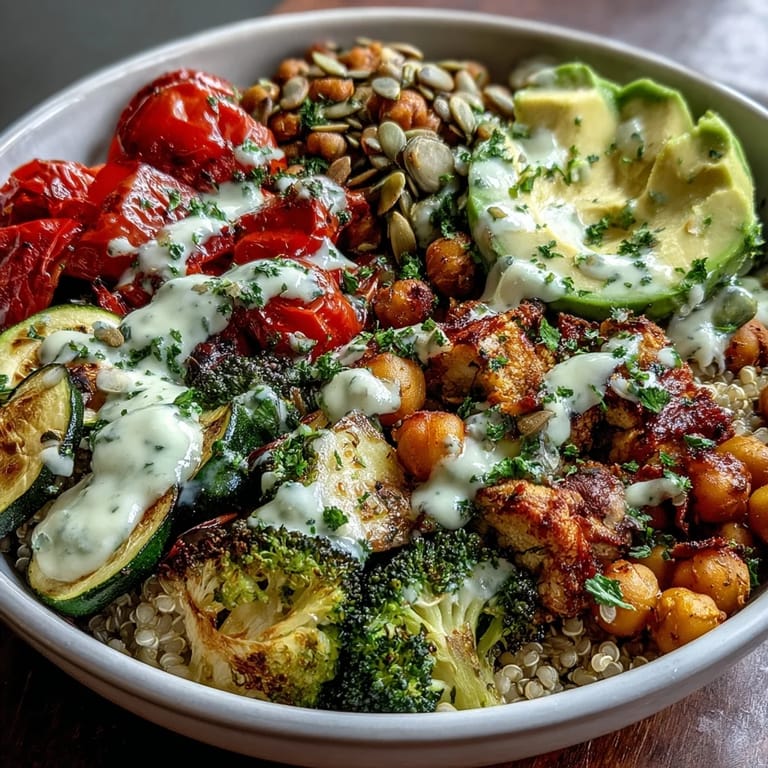
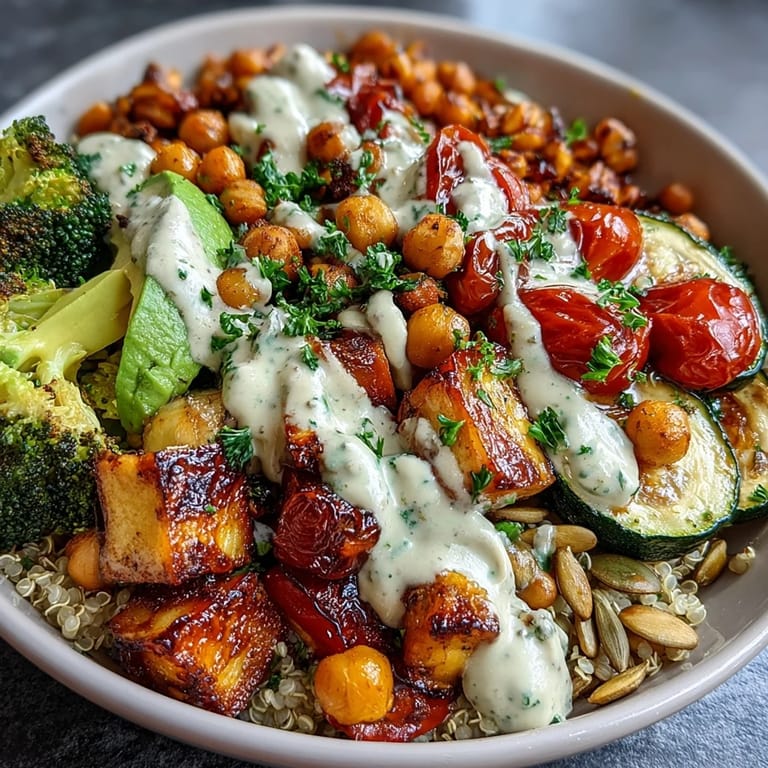
- Start with a base of warm grain, arrange roasted vegetables and legumes on top, then drizzle generously with tahini dressing. The warm grain base helps the dressing warm slightly and become even creamier.
- Finish with flourish:
- Layer on the fresh parsley, avocado slices, and toasted pumpkin seeds, then squeeze a lemon wedge over the whole thing. This final brightness ties everything together and reminds you why you love eating food that tastes like actual food.
 Save
Save My mom tasted this bowl and declared it her new go-to dinner when she's tired but wants to feel like she's taking care of herself. That's when I knew it was a keeper—not because it's complicated, but because it asks so little while giving so much back.
Building the Perfect Bowl
The magic of a grain bowl lives in its architecture. Warm grains create a comfortable bed for everything else, roasted vegetables add sweetness and char that balances the earthiness of legumes, and a good dressing ties it all together into something that feels cohesive rather than just a collection of separate components. Temperature matters too—keeping your grains warm while vegetables are still slightly hot from the oven creates steam that carries flavors around. The cold avocado and fresh herbs offer brightness and crunch that prevent the whole thing from feeling heavy or one-note.
Variations Worth Exploring
Once you understand the structure of this bowl, you realize you can improvise endlessly depending on what's in season or what you're craving. Spring calls for roasted asparagus and peas with fresh dill, summer wants corn and zucchini with basil, fall asks for sweet potato and cauliflower with sage, and winter doesn't mind root vegetables and hearty greens. You could swap the tahini dressing for a ginger-miso vinaigrette, a cilantro-lime situation, or even a simple lemon-herb oil depending on your mood. Some people add a fried egg on top, others crumble feta cheese across the whole thing, and neither choice is wrong—this bowl is forgiving and wants to be made your own.
Storage and Meal Prep
This bowl actually improves when you give its components time to sit together overnight in the refrigerator, though you'll want to keep the avocado and fresh herbs separate until you're ready to eat. Store your dressing in a small jar so you can shake it back to consistency, and assemble only the portion you're eating so the warm grain stays warm and the fresh elements stay fresh. If you're meal prepping for the week, cook a big batch of grains, roast a large sheet pan of vegetables, and portion legumes into containers, then mix and match throughout the week depending on what you're in the mood for.
- Keep avocado slices in a container with lemon juice to prevent browning until you're ready to serve.
- Reheat grains gently with a splash of water or broth rather than blasting them in the microwave to restore creaminess.
- Don't toss everything together until you're about to eat, or the bowl loses its textural contrast and personality.
 Save
Save This bowl taught me that nourishing food doesn't need to be boring, and that feeding yourself well is an act of kindness you deserve on ordinary Tuesdays just as much as on special occasions. Make it once, then make it your own.
Recipe Questions & Answers
- → Can I make this bowl ahead of time?
Yes, this bowl is excellent for meal prep. Cook grains, roast vegetables, and prepare dressing up to 4 days ahead. Store components separately and assemble when ready to serve.
- → What other grains work well?
Bulgur, barley, couscous, or millet make great alternatives. For gluten-free options, stick with quinoa, brown rice, or certified gluten-free grains.
- → Can I use frozen vegetables?
Frozen vegetables like broccoli florets work well. Thaw and pat dry before roasting. Fresh vegetables yield better texture but frozen is convenient.
- → How do I store leftovers?
Keep grains, vegetables, and legumes in separate airtight containers in the refrigerator for 4-5 days. Add fresh garnishes like avocado just before serving.
- → Is this bowl protein-rich enough for a main dish?
Absolutely. The combination of chickpeas, lentils, and grains provides about 16 grams of protein per serving, making it a satisfying complete meal.
- → Can I add cheese?
Feta, goat cheese, or cotija crumble beautifully over the warm vegetables. Add after assembling to preserve texture. This makes the dish vegetarian but not vegan.