 Save
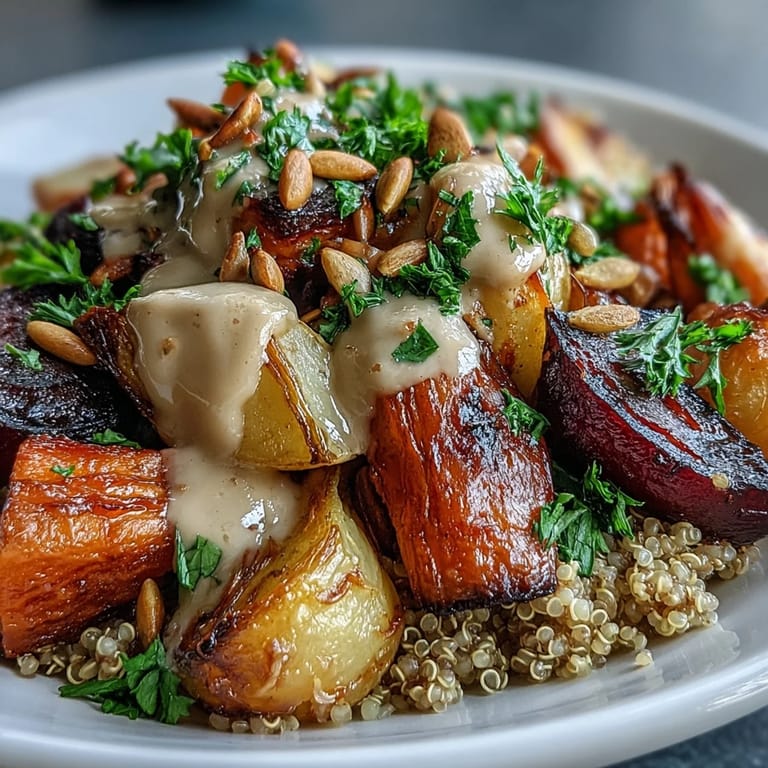
Save The first time I truly understood roasted root vegetables was on a crisp autumn afternoon when my neighbor handed me a paper bag filled with beets, carrots, and parsnips from her garden. I had no plan, just these earthy, mud-dusted vegetables and curiosity. That evening, I tossed them with olive oil and let the oven do the magic—the kitchen filled with this caramelized sweetness I hadn't expected, and suddenly I was creating bowls that felt both grounding and celebratory. Now this dish is my answer whenever I need something wholesome that actually tastes like indulgence.
I made this for a potluck last winter where everyone brought heavy casseroles, and somehow this bright, colorful bowl became the thing people kept coming back to. My friend Sarah asked for the recipe right there at the table, and now she makes it every Thursday. That moment taught me that food doesn't need to be complicated to feel special—it just needs to be made with intention.
Ingredients
- Carrots: The sweet backbone of this bowl—peel them fresh if you can, as pre-peeled ones sometimes lack that bright vegetal snap.
- Beets: These jewel-toned roots add earthiness and a natural sweetness that deepens with roasting, but wear gloves unless you like pink hands.
- Turnips: Their subtle, slightly peppery flavor keeps the bowl from becoming too sweet, balancing the other roots beautifully.
- Parsnips: The secret ingredient—they caramelize almost like dates and add a creamy texture that surprised me the first time I used them.
- Olive oil: Use a good one you actually like tasting, since it coats every vegetable and matters more here than in other applications.
- Sea salt and black pepper: Don't skip freshly grinding the pepper—it wakes up the roasted vegetable sweetness.
- Dried thyme or rosemary: Optional but I've never skipped it because the herb fragrance transforms the whole experience.
- Quinoa: Rinse it thoroughly under cold water before cooking, or it tastes slightly bitter—this one step changed my relationship with quinoa entirely.
- Water or vegetable broth: Broth adds subtle flavor, but water lets the other elements shine if you prefer.
- Tahini: The creamy drizzle that ties everything together—invest in fresh tahini from a place with good turnover, as old tahini can taste musty.
- Lemon juice: Fresh lemon is non-negotiable here; the brightness cuts through the richness perfectly.
- Garlic: Just one clove keeps it subtle so the vegetables remain the star.
- Maple syrup or honey: A whisper of sweetness in the tahini sauce that sounds unnecessary until you taste how it balances the lemon.
- Fresh parsley: Chop it just before serving so it stays vibrant and doesn't turn dark.
- Toasted seeds: Pumpkin or sunflower seeds add crunch and a nutty finishing touch that makes people pause and ask what that is.
Tired of Takeout? 🥡
Get 10 meals you can make faster than delivery arrives. Seriously.
One email. No spam. Unsubscribe anytime.
Instructions
- Heat your oven and prepare:
- Preheat to 425°F and line your baking sheet with parchment paper—this prevents sticking and makes cleanup feel like a gift to your future self. The hot oven is key to getting that deep caramelization.
- Toss the vegetables:
- Combine all your cut root vegetables in a large bowl, then drizzle with olive oil and season with salt, pepper, and herbs if using. Toss until everything is evenly coated, which takes about a minute but matters more than you'd think.
- Roast until golden:
- Spread the vegetables in a single layer on your baking sheet and roast for 30 to 35 minutes, stirring halfway through. You'll know they're ready when the edges are caramelized and a fork slides through easily.
- Cook the quinoa:
- While vegetables roast, combine rinsed quinoa with water or broth and salt in a saucepan. Bring to a boil, then reduce heat, cover, and simmer for 15 minutes, then let it rest covered for 5 more minutes before fluffing with a fork.
- Make the tahini sauce:
- Whisk together tahini, lemon juice, water, minced garlic, salt, and maple syrup in a small bowl until smooth. If it's too thick, add water a tablespoon at a time until you reach a drizzleable consistency.
- Assemble your bowls:
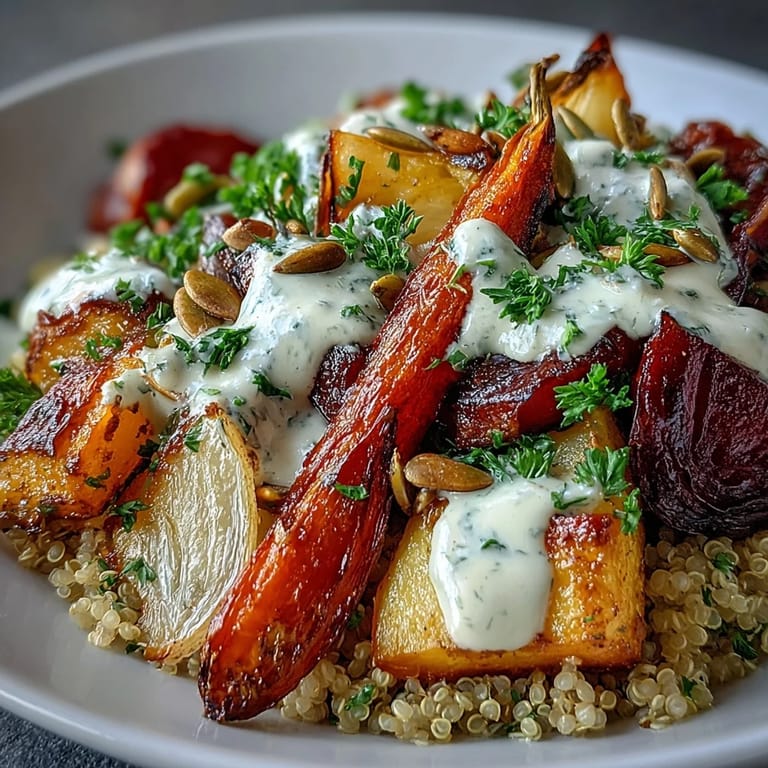
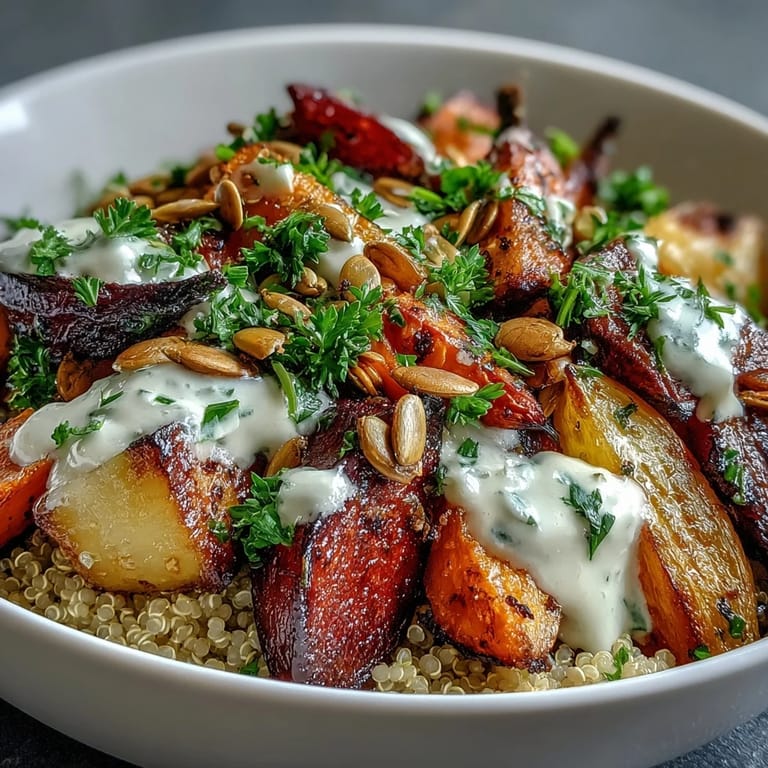
- Divide fluffy quinoa among four bowls, top with roasted vegetables, drizzle generously with tahini sauce, and finish with fresh parsley and toasted seeds. Serve immediately while the vegetables are still warm.
 Save
Save Last spring, a friend going through a rough time came over, and I made this bowl because I didn't know what else to do. We ate quietly together, and afterward she said it was the first meal in weeks that felt like self-care rather than obligation. That's when I realized this dish is more than nutrition—it's a small act of kindness you can give yourself or someone else.
The Secret to Perfectly Caramelized Vegetables
The magic happens when you give the vegetables space on the baking sheet—crowding them creates steam instead of that beautiful golden crust. I used to pile everything in, wondering why my roasted vegetables tasted steamed, until I learned to spread them out in a single layer. Now I almost use two baking sheets if needed, because ten extra minutes of oven time is worth the difference between good and genuinely delicious.
Making It Your Own
The beauty of this bowl is how forgiving it is to substitutions and additions. Sweet potatoes work wonderfully instead of turnips, rutabaga adds an earthier note if you want to experiment, and chickpeas or a poached egg transform it into something even more substantial when you need extra protein. I've also tossed in roasted Brussels sprouts and cauliflower, and each version feels fresh despite using the same tahini base and quinoa.
Pairing and Serving Suggestions
This bowl pairs beautifully with a crisp white wine like Sauvignon Blanc, which cuts through the tahini richness, or herbal tea if you want to keep it simple and grounding. I've also found it works wonderfully as a cold salad the next day if you keep the tahini separate and drizzle just before eating. Serve it warm for maximum comfort, or at room temperature on a warm day when you want something nourishing but not heavy.
- Make extra tahini sauce because people always want more than you expect.
- Prep your vegetables the night before and keep them covered in the fridge—just toss with oil and roast when you're ready.
- Toast your own seeds in a dry pan for five minutes if you haven't already, since they're even better fresh.
 Save
Save This roasted root vegetable bowl has become my recipe for moments when I want to nourish myself or someone I care about without fuss. It's the kind of dish that reminds you that simple food, made with intention, is enough.
Recipe Questions & Answers
- → Can I prepare the vegetables ahead of time?
Absolutely. You can peel and cut all the root vegetables up to two days in advance. Store them in an airtight container with cold water to prevent browning, then drain and pat dry before roasting.
- → What other root vegetables work well in this bowl?
Sweet potatoes, rutabaga, celery root, and even butternut squash all roast beautifully alongside the traditional roots. Feel free to use whatever looks freshest at your market or what you have on hand.
- → How do I store leftovers?
Keep components separate in airtight containers for up to five days. The quinoa and roasted vegetables reheat beautifully in the microwave or oven. Store the tahini sauce separately and add fresh just before serving.
- → Can I make this oil-free?
You can roast the vegetables without oil, though they won't caramelize quite as deeply. Try tossing them with a bit of vegetable broth or aquafaba instead, and keep a close eye to prevent sticking.
- → What can I use instead of tahini?
Cashew cream, almond butter, or even avocado blended with lemon and garlic make excellent creamy alternatives. Each brings a slightly different flavor profile while maintaining that luxurious texture.
- → How can I add more protein?
Chickpeas tossed with the vegetables during the last 15 minutes of roasting add both protein and texture. A poached egg, crispy tofu cubes, or even shredded chicken also work beautifully over the quinoa base.