 Save
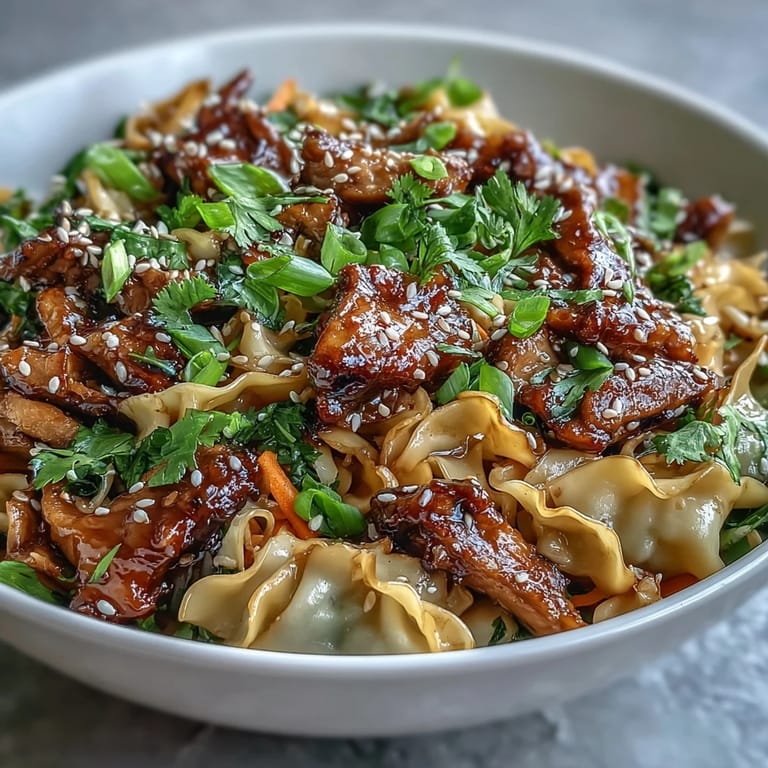
Save My roommate came home one night craving dumplings but we had no wrappers, no steamer, and honestly no patience for folding. I stared at the fridge—ground pork, cabbage, ginger—and thought, what if I just skip the wrapper? That night we made something that tasted exactly like the inside of a perfect potsticker, piled over noodles and drenched in that salty-tangy sauce you always double-dip into. It was so good we forgot we were improvising.
I made this for a friend who was convinced she didn't like ground pork. She ate two bowls, then texted me the next morning asking for the recipe. There's something about the way the meat crisps up in the pan, catching those dark caramelized edges, that changes everything. The sauce clings to every strand of noodle, every shred of cabbage. It's the kind of meal that makes people lean back in their chairs and sigh.
Ingredients
- Rice noodles: They stay tender and slippery, soaking up the sauce without getting mushy; if you overcook them even slightly, rinse under cold water immediately.
- Ground pork: The fat renders beautifully and crisps at the edges; chicken works but won't brown quite as deeply.
- Soy sauce (for seasoning meat): This is what gives the pork that dumpling-filling vibe; use low-sodium or it can get too salty fast.
- Toasted sesame oil: A little goes a long way; it adds that nutty, warm flavor you associate with dim sum.
- Cornstarch: Helps the meat hold moisture and creates a slight glaze when it hits the heat.
- White pepper: Traditional in Chinese cooking, it has a sharper, more floral bite than black; if you only have black, use a light hand.
- Napa cabbage (optional in meat): Finely minced and squeezed dry, it keeps the pork juicy and authentic to dumpling filling.
- Garlic and ginger: The aromatics that make your kitchen smell like a good restaurant; fresh ginger is non-negotiable here.
- Green onions: Use the whites for cooking and the greens for garnish; they add sharpness and color.
- Green cabbage: Shreds down fast and adds crunch and sweetness; don't skip the high heat or it will steam instead of sear.
- Carrots: Matchstick or shredded, they bring color and a hint of sweetness that balances the soy.
- Shiitake mushrooms: Earthy and meaty, they add umami; cremini work too if that's what you have.
- Bean sprouts: Optional but they add a fresh, crisp pop at the end; toss them in last so they stay crunchy.
- Soy sauce (for sauce): The backbone of the bowl; low-sodium lets you control the salt.
- Rice vinegar: Brightens everything and cuts through the richness of the pork.
- Oyster sauce: Adds depth and a hint of sweetness; hoisin is sweeter and works if you want a different vibe.
- Chili-garlic sauce: This is your heat; start with less and add more at the table.
- Brown sugar or honey: Just enough to balance the acid and salt.
- Chicken broth: Thins the sauce so it coats instead of clumps; water works in a pinch.
- Cilantro and sesame seeds: Freshness and crunch right before you dig in.
Tired of Takeout? 🥡
Get 10 meals you can make faster than delivery arrives. Seriously.
One email. No spam. Unsubscribe anytime.
Instructions
- Prepare the noodles:
- Boil them just until tender, then drain and rinse under cold water to stop the cooking. Toss with a few drops of oil so they don't clump into a sad brick while you cook everything else.
- Season the meat:
- Whisk the soy sauce, sesame oil, cornstarch, white pepper, sugar, and salt together, then pour it over the ground pork and mix gently until it feels sticky. If you're using napa cabbage, squeeze it bone-dry first or the meat will get watery.
- Make the sauce:
- Combine soy sauce, rice vinegar, oyster sauce, chili-garlic sauce, sesame oil, sugar, and broth in a bowl and whisk until smooth. Taste it now; this is your chance to adjust before it hits the pan.
- Prepare the vegetables:
- Shred the cabbage and carrots, slice the mushrooms thin, and separate the green onion whites from the greens. Prep work here makes the cooking part feel like a breeze.
- Brown the meat:
- Heat oil in a large skillet over medium-high, then crumble in the pork and leave it alone for a few minutes so it gets those crispy, golden edges. Break it up and cook through, then drain off excess fat if there's a pool.
- Add aromatics:
- Push the meat aside, add a little more oil if the pan is dry, then toss in garlic, ginger, and the white parts of the green onions. Stir for 30 seconds until your kitchen smells amazing, then mix everything together.
- Cook vegetables:
- Add mushrooms first and let them soften, then toss in cabbage and carrots and stir-fry until the cabbage wilts but still has some bite. If the pan looks dry, splash in a little water.
- Combine with sauce:
- Pour the sauce over everything and toss well, letting it simmer for a minute or two until it thickens slightly and clings to the meat and vegetables.
- Add noodles:
- Toss the cooked noodles into the skillet and mix gently but thoroughly, adding a splash of water if it looks too dry. If you're using bean sprouts, stir them in at the very end so they stay crisp.
- Finish and serve:
- Taste and adjust with more soy sauce, chili paste, or a squeeze of lime. Stir in half the green onion tops, then divide into bowls and top with the rest of the greens, cilantro, and sesame seeds.
 Save
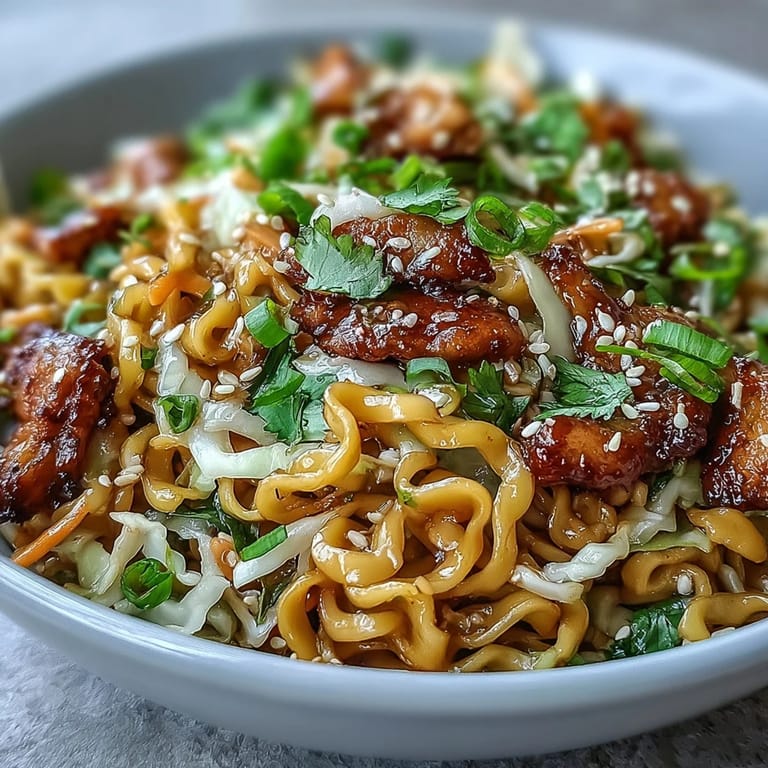
Save The first time I brought this to a potluck, someone asked if I'd ordered it from the new noodle spot downtown. I didn't correct them right away. There's something quietly satisfying about watching people go back for seconds of something you threw together on a Tuesday. It's not fancy, but it's the kind of food that makes people feel taken care of.
Choosing Your Noodles
Rice noodles are traditional and stay silky, but lo mein or even spaghetti work if that's what you have. The key is to undercook them slightly because they'll finish in the sauce. I've used thick udon before when I wanted something more substantial, and it was just as good. Whatever you choose, rinse them after draining or they'll clump together while you're busy browning the pork.
Getting the Pork Right
The trick is to press it into an even layer in the hot pan and resist the urge to stir. Let it sit for two or three minutes until the bottom turns golden and crispy, then break it up. That caramelization is where all the flavor lives. If you use chicken or turkey instead, add a little extra oil because leaner meats won't render as much fat.
Making It Your Own
This recipe is forgiving and adaptable. Swap the cabbage for bok choy or kale, use ground turkey or crumbled tofu, or add snap peas and bell peppers if that's what's in the crisper. I've made it with leftover rotisserie chicken in a pinch, and it still tasted like a complete meal. The sauce is the constant—once you have that down, the rest can shift with your mood or your fridge.
- Top with a soft-boiled or fried egg for extra richness and a runny yolk that melts into the sauce.
- Add a handful of spinach or watercress in the last minute for a pop of green.
- Keep extra chili-garlic sauce and lime wedges on the table so everyone can adjust to their taste.
 Save
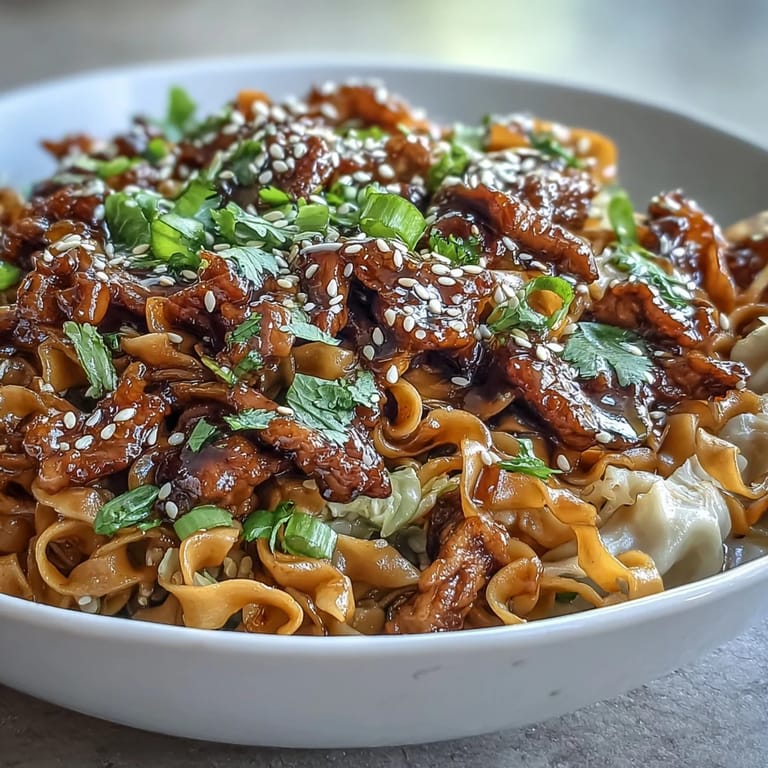
Save This bowl has become my answer to weeknight chaos, the thing I make when I want something that feels like a treat without the effort. It's the kind of recipe you'll make once, then keep coming back to because it's reliable, satisfying, and always tastes like you tried harder than you did.
Recipe Questions & Answers
- → What makes this taste like potstickers?
The seasoning blend for the ground meat mirrors traditional dumpling filling with soy sauce, sesame oil, white pepper, and sugar. The sauce combines the same flavors found in potsticker dipping sauce—soy, rice vinegar, oyster sauce, chili-garlic, and sesame oil. When tossed with noodles, you get all those savory, tangy, aromatic notes in every bite.
- → Can I make this gluten-free?
Absolutely. Use rice noodles instead of wheat lo mein noodles, swap regular soy sauce for gluten-free tamari, and choose a gluten-free oyster sauce. Most other ingredients naturally fit gluten-free diets. Always check labels on condiments to be certain.
- → What other proteins work well?
Ground chicken, turkey, or beef all substitute beautifully for pork. For a lighter version, try crumbled tofu or plant-based ground meat. The seasoning works equally well across different proteins, so you can adjust based on preference or what you have on hand.
- → How do I prevent noodles from sticking together?
After draining, rinse the cooked noodles briefly with cold water to halt cooking and wash away excess starch. Toss them immediately with a few drops of sesame or neutral oil. This simple step keeps them separate until you're ready to combine everything at the end.
- → Can I prep components ahead?
You can shred vegetables, mix the sauce, and season the meat up to a day in advance. Store each component separately in the refrigerator. When ready to eat, cook the meat and vegetables, then combine with freshly cooked noodles for the best texture.
- → What vegetables can I swap in?
Baby bok choy, napa cabbage, or thinly sliced kale work in place of green cabbage. Bell peppers, snap peas, or sliced water chestnuts add crunch. The recipe's flexible—use what's fresh or what your family enjoys most.