 Save
Save Standing in my kitchen as the first rays of spring sunshine spilled through the window I reached for a bunch of asparagus, still dewy from the market. The prospect of a quick flatbread lunch gave me the nudge to experiment with creamy burrata and a hit of fresh lemon zest. Not every dish can evoke the thrill of improvisation, but this one nudged me out of routine. There’s something about the crackle of flatbread and the scent of roasting vegetables that wakes up the appetite. I enjoy how every step—layering, zesting, scattering basil—feels like building anticipation for that first bite.
I made this flatbread for a backyard picnic after clouds finally gave way to sun. My best friend peeled off the parchment with a flourish, laughing as burrata spilled over the crust, and it set the tone for hours of storytelling and second helpings.
Ingredients
- Store-bought flatbreads or naan: Using good-quality flatbreads gives a sturdy yet tender base—warmed directly on the oven rack gives best crispiness.
- Olive oil: Brushing the bread and tossing with asparagus layers in a fruity depth—go generous for a golden finish.
- Fresh asparagus: The freshest stalks snap when bent and carry a bright, green character that comes alive after a short roast.
- Sea salt & cracked black pepper: These lift the natural flavors of asparagus and help season both veggies and bread harmoniously.
- Burrata cheese: A rich and creamy centerpiece—break it open while cool so it gently warms over the flatbread without running everywhere.
- Fresh lemon zest and juice: The zest perfumes the whole dish while the juice sharpens edges and keeps the flavors singing.
- Fresh basil leaves: Torn by hand delivers gentle, aromatic lift and feels extra celebratory sprinkled over the top.
- Chili flakes (optional): Just a pinch adds a playful tingle; not strictly necessary but delightful for heat chasers.
Tired of Takeout? 🥡
Get 10 meals you can make faster than delivery arrives. Seriously.
One email. No spam. Unsubscribe anytime.
Instructions
- Prep the Oven & Sheet:
- Preheat your oven to 220°C (425°F) and line a baking sheet with parchment paper; you'll hear an inviting crackle as the flatbread bakes.
- Roast the Asparagus:
- Toss trimmed asparagus with olive oil, salt, and pepper, spreading them out so each piece has room to roast; after about 10 to 12 minutes, you should see slight charring and smell a nutty green aroma.
- Crisp the Flatbreads:
- Brush the flatbreads with olive oil and bake on a tray or straight on the oven rack for 4 to 6 minutes, just until the edges are golden and crisp to the touch.
- Spread the Burrata:
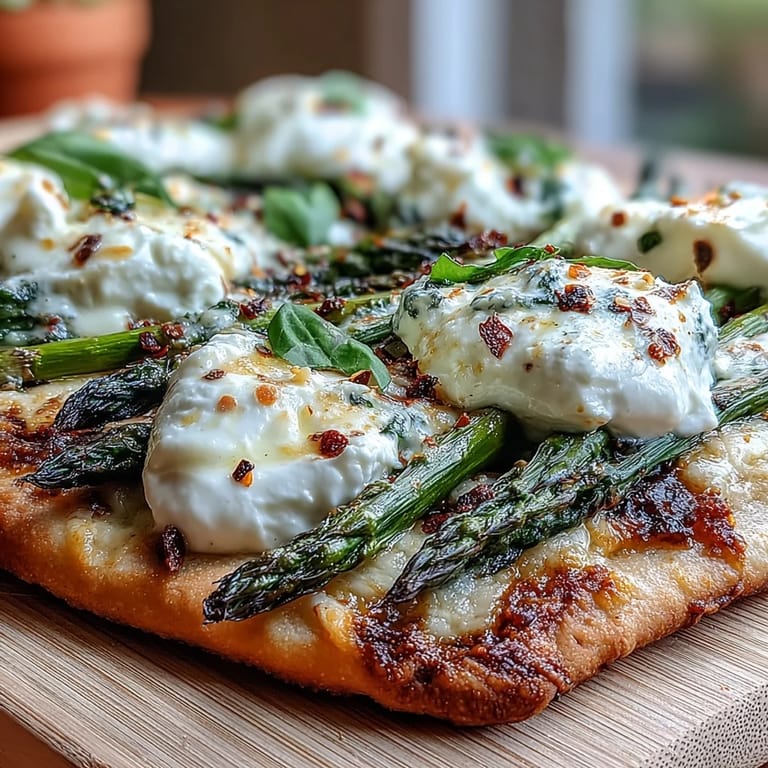
- Once out of the oven, nestle creamy burrata on each flatbread, letting it break open naturally—don’t fuss if it oozes towards the edges.
- Add the Asparagus and Citrus:
- Top flatbreads with roasted asparagus, drizzle fresh lemon juice, and scatter over bright lemon zest for layers of flavor in each bite.
- Finish and Serve:
- Sprinkle torn basil and (if desired) a whisper of chili flakes, slice warm, and serve at once for peak enjoyment.
 Save
Save 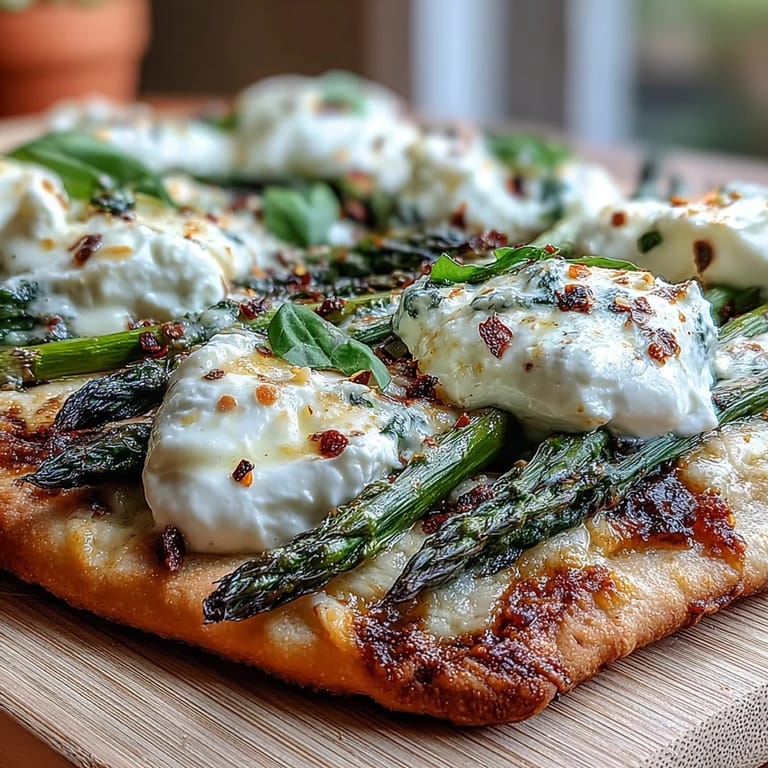 Save
Save The day I brought this to the table while the flatbread was still warm, someone stopped mid-conversation just to tell me it tasted like spring itself—a small moment but one that still makes me smile.
Getting Asparagus Just Right
If you roast asparagus until it's just tender with only a hint of charring, it stays sweet and bright alongside creamy cheese—overcooking leads to bitterness and flop. Giving asparagus space on the pan ensures edges caramelize while insides stay vibrant.
Choosing the Best Burrata
Burrata is a forgiving cheese, but the freshest you can find will melt delicately and provide a richer mouthfeel. If burrata's out of reach, a ball of soft mozzarella can stand in, but let it come to cool room temperature before using so it doesn’t seize up on hot bread.
Flavor Twists for Every Crowd
Try draping slices of prosciutto or smoked salmon atop the flatbread for an elegant upgrade, or drizzle with extra virgin olive oil seasoned with a hint of garlic. Tangy arugula or baby spinach also play beautifully with the richness of burrata, making each bite unique.
- Let each person add a squeeze of lemon at the table.
- Swap asparagus for tender broccolini if you spot some at the market.
- Don’t toss the lemon after zesting—its juice brightens even leftovers.
 Save
Save  Save
Save No need to wait for a special occasion—sometimes, a little fresh asparagus and a tuck of cheese is all it takes to turn an ordinary meal into something conversation-worthy.
Recipe Questions & Answers
- → How long should asparagus be roasted?
Toss trimmed asparagus with olive oil, salt and pepper and roast at 220°C (425°F) for 10–12 minutes. This yields tender stalks with slight char for added flavor without becoming mushy.
- → What’s the best way to handle burrata on warm flatbread?
Remove burrata from the fridge just before serving, gently tear or press it onto the warm flatbread so the cream spills slightly without fully melting. This preserves its silky texture and contrasts with the roasted asparagus.
- → Can I swap ingredients if unavailable?
Yes. Substitute burrata with fresh mozzarella for a firmer cheese, and use prosciutto or smoked salmon to add protein. Adjust lemon and salt to taste when swapping textures or salt levels.
- → How do I keep the flatbread crisp when assembling?
Briefly bake or toast flatbreads until they just begin to crisp, then assemble immediately before serving. Avoid over-topping; a light drizzle of lemon juice and spaced asparagus help maintain texture.
- → Are there seasoning tips to elevate the flavors?
Finish with lemon zest and juice for brightness, torn fresh basil for herbaceous notes, and a pinch of chili flakes for heat. A light drizzle of high-quality olive oil enhances richness.
- → How should leftovers be stored and reheated?
Store leftovers in an airtight container in the fridge for up to 24 hours. Reheat in a 180°C (350°F) oven or toaster oven briefly to revive the crust, then add fresh burrata or torn mozzarella after warming.