 Save
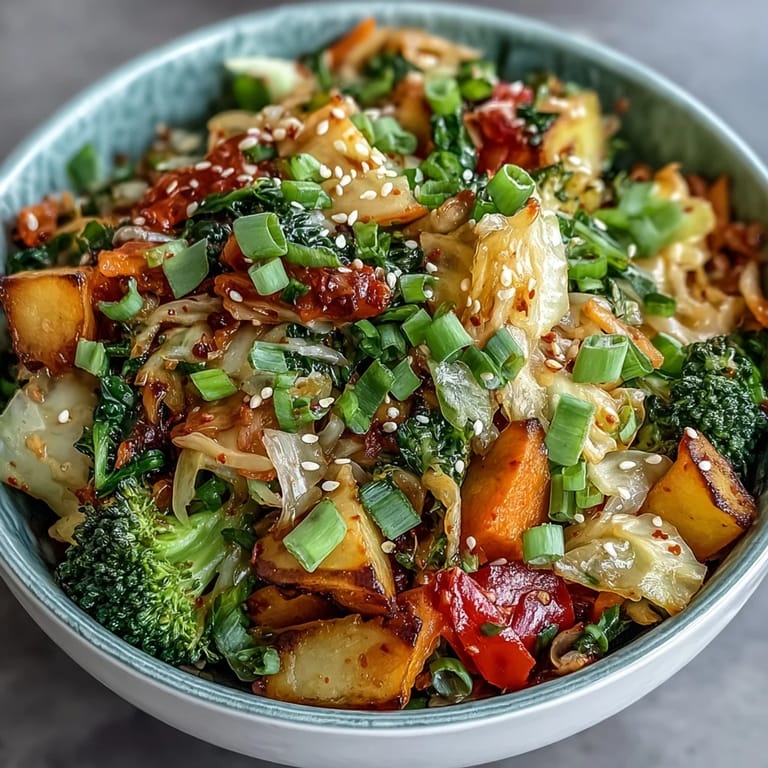
Save My kitchen got wonderfully loud one December evening when my partner dumped a jar of kimchi on the counter, declaring we needed something warm but alive. That collision of intention—wanting comfort without heaviness—led me to this stir-fry, which has since become the dish I make when I want vegetables to feel like an event rather than an obligation. The key is the timing: everything cooks fast enough to keep its snap, then the kimchi arrives at the end like a surprise guest who makes everything more interesting. It's the kind of meal that tastes like you've been cooking for hours when really you've just been moving quickly and paying attention.
I served this to my sister after she'd had jaw surgery and could only eat soft foods, so I steamed everything a bit longer and blended half the kimchi into the sauce. Watching her close her eyes and actually enjoy eating again reminded me that this dish isn't just about flavor—it's adaptable, forgiving, willing to show up for you however you need it. That small shift in technique taught me more about cooking than any rule ever could.
Ingredients
- Broccoli florets: Cut them small so they cook through in minutes; the little trees catch the sauce beautifully and add that satisfying crunch that holds up to the heat.
- Carrots: Slicing on the bias isn't just pretty—it actually increases surface area so they caramelize slightly and cook faster.
- Parsnip: It adds earthiness that regular carrots miss, and a subtle sweetness that balances the funky depth of kimchi without needing extra sugar.
- Sweet potato matchsticks: They soften quickly and add a natural sweetness that makes the whole dish feel complete rather than vegetal.
- Green cabbage: It wilts but keeps some texture, and its mild flavor lets the kimchi be the star.
- Red bell pepper: Added later so it stays tender-crisp, bringing color and slight sweetness.
- Fresh ginger: Grate it just before cooking so the volatile oils are still active—this makes the dish smell incredible and taste warmer.
- Garlic: Mince it fine so it distributes throughout and almost melts into the oil.
- Toasted sesame oil: This is non-negotiable for that nutty, toasted flavor that makes everything taste intentional.
- Soy sauce or tamari: Tamari is gluten-free and tastes slightly deeper; use whichever suits your body.
- Rice vinegar: It brightens everything without harshness, cutting through the richness of the oil and the funk of the kimchi.
- Maple syrup or honey: Just enough to round out the flavors without making it sweet—think of it as tuning an instrument.
- Kimchi: This is where the magic lives; buy the kind that actually contains live cultures, and add it off heat so the probiotics survive.
- Green onions and sesame seeds: These aren't decoration—they add crunch and a brightness that lifts everything at the end.
Tired of Takeout? 🥡
Get 10 meals you can make faster than delivery arrives. Seriously.
One email. No spam. Unsubscribe anytime.
Instructions
- Prep everything first:
- There's a reason this matters: once you start cooking, the heat moves fast and you won't have time to hunt for a measuring spoon. Line everything up in small bowls like you're ready for surgery.
- Heat your oil until it shimmers:
- You'll see the sesame oil start to move across the pan like liquid silk; that's when you know it's hot enough to actually cook, not just warm things up.
- Bloom your ginger and garlic:
- Let them sit in that hot oil for just 30 seconds—your whole kitchen will smell like a restaurant, and you'll know you're on the right track. This step releases all their volatile compounds into the oil.
- Add the hardy vegetables first:
- Carrots, parsnip, sweet potato, and broccoli go in together because they need the most time. Toss them constantly for 4 to 5 minutes; they should start getting golden at the edges but still have resistance when you bite them.
- Bring in the quick-cooking vegetables:
- Cabbage and bell pepper enter the party next, and they only need 3 to 4 minutes because they're already tender. You want everything to finish at roughly the same moment—that's the real skill here.
- Mix your sauce and pour:
- Whisk the soy sauce, rice vinegar, and maple syrup in a small bowl so the sweetness dissolves. Pour it over everything and toss hard so every piece gets coated.
- Remove from heat and add the kimchi:
- This is crucial—off heat means the probiotics survive. Gently fold the chopped kimchi through everything; you're not trying to break it apart, just distribute it.
- Taste and adjust:
- This is your moment to be honest about whether you need more heat, more acid, or more funk. Cooking is a conversation, not a script.
 Save
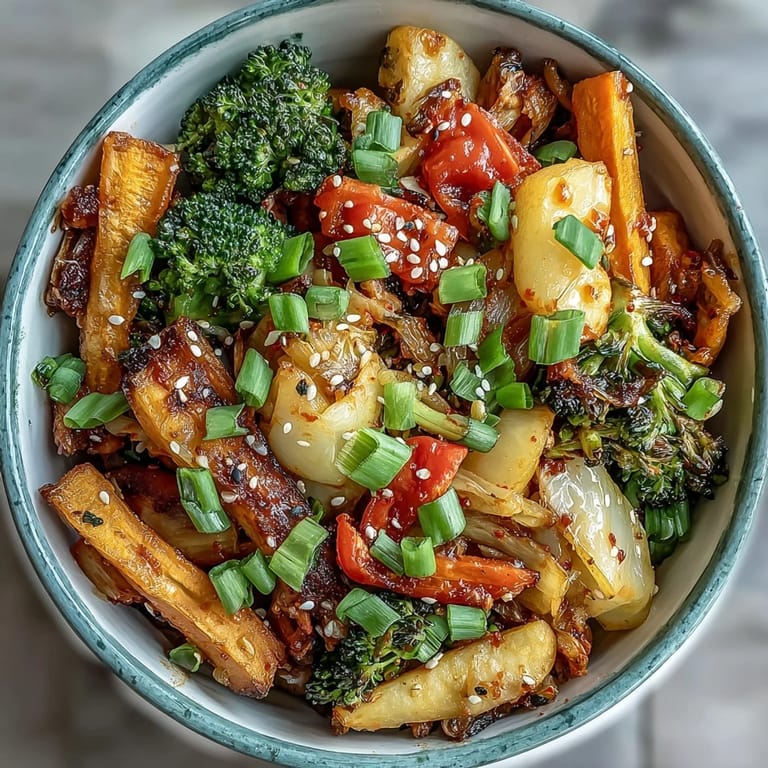
Save One cold night I made this dish and accidentally added too much kimchi—panic set in for about three seconds until I realized it had just become spicier and funkier, which turned out to be exactly what I needed that particular evening. That failure became my favorite version, and I've made it that way ever since. It taught me that recipes are suggestions, not laws.
The Best Vegetables to Use
Winter root vegetables are your friends here because they hold their shape and develop little caramelized edges that taste almost nutty. I've substituted turnips, rutabaga, and even parsnip chips when broccoli wasn't calling to me, and the stir-fry just becomes a different song—same structure, different melody. Think of this as a template rather than a rulebook: whatever lives in your crisper drawer that feels sturdy enough to handle high heat is probably exactly right.
Serving and Storage
This tastes best served immediately while everything still has texture contrast, but it keeps for three days in the fridge if you don't mind the vegetables getting softer. I usually pile it over steamed rice or soba noodles to make it feel like a full meal, though sometimes I eat it straight from the bowl standing at the counter because I'm too hungry to be civilized. Cold leftovers are also weirdly good tucked into a wrap with avocado and a drizzle of sriracha mayo.
- Serve over rice, quinoa, or noodles for a heartier dinner that actually sticks to your ribs.
- Refrigerate leftovers in an airtight container and reheat gently so the kimchi doesn't get too aggressively funky.
- The sesame seeds stay crunchier if you sprinkle them fresh just before eating rather than stirring them in.
Why Kimchi Changes Everything
Fermented foods aren't just trendy—they actually change how your body processes everything you eat, and they add layers of flavor that you can't create any other way. Kimchi specifically brings spice, funk, and brightness all at once, which is why it transforms simple stir-fried vegetables into something that feels like it has a personality. The probiotics are just the bonus prize for eating something that tastes genuinely alive.
 Save
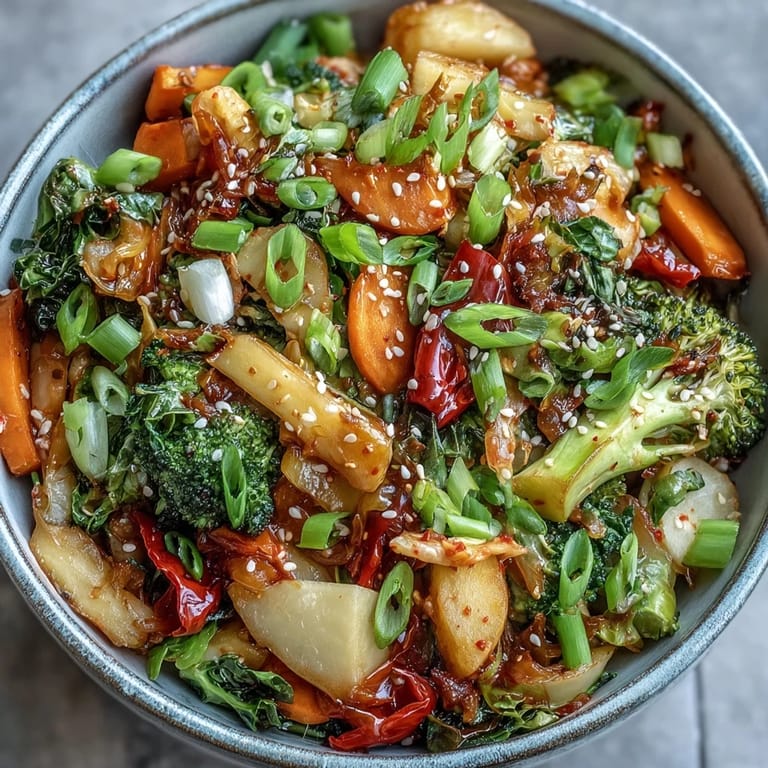
Save This dish reminds me that the best meals come from listening to what you have and what you need, then letting them meet somewhere in the middle. Make it exactly as written the first time, then trust yourself to make it yours.
Recipe Questions & Answers
- → Can I make this gluten-free?
Yes, simply substitute tamari for the soy sauce. Always check your kimchi label to ensure it's gluten-free as some varieties contain wheat-based ingredients.
- → Why add kimchi at the end instead of cooking it?
Adding kimchi at the end preserves the beneficial probiotics and live cultures that can be destroyed by high heat. It also maintains the kimchi's crisp texture and bright flavor.
- → What other winter vegetables work well?
Turnips, rutabaga, kale, Brussels sprouts, or butternut squash all work beautifully. Adjust cooking times accordingly—harder vegetables need more time, leafy greens need less.
- → How can I add protein?
Serve over rice, quinoa, or soba noodles for a complete meal. You can also add tofu, edamame, or tempeh during the last few minutes of cooking.
- → Can I adjust the spice level?
Absolutely. Start with less kimchi and add more to taste. For additional heat, include sliced chili peppers or a drizzle of chili oil along with the aromatics.
- → How long does this keep in the refrigerator?
Store in an airtight container for up to 4 days. Reheat gently in a skillet or microwave. Note that vegetables will soften over time and kimchi will become more fermented.