 Save
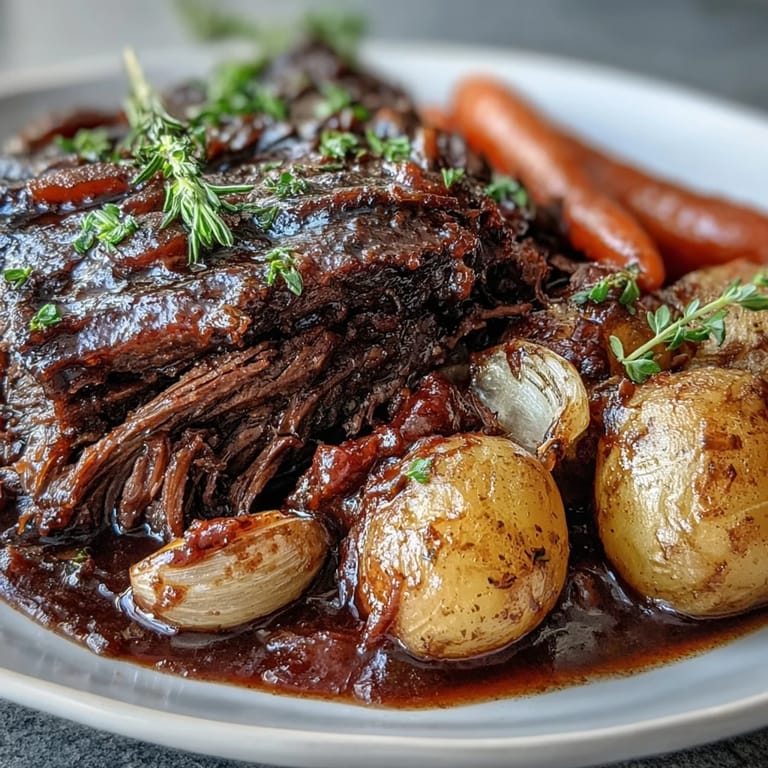
Save The smell of rosemary and red wine simmering on the back burner takes me back to rainy Sunday afternoons when my apartment would fill with that rich, earthy aroma. My roommate would poke her head into the kitchen, asking what was making the whole house smell like a cozy restaurant. Now, making pot roast feels less like following a recipe and more like creating an experience that brings people to the table without them even being asked.
I made this for my dad once, and he kept going back for seconds until there was barely enough left for lunch the following day. Seeing someone slide their fork through beef that falls apart at the slightest touch, that look of pure comfort on their face, thats the moment this recipe transformed from just dinner into something that feels like home.
Ingredients
- Beef chuck roast: The marbling in chuck roast breaks down beautifully during slow cooking, creating those tender, shredable fibers that make pot roast so satisfying. I learned the hard way that leaner cuts just dry out.
- Kosher salt and black pepper: Generous seasoning upfront is crucial because the meat is thick and only gets seasoned once before the long braise.
- Flour: This creates a subtle crust during searing and helps thicken the gravy naturally as it cooks. Gluten-free flour works just as well if thats what you need.
- Olive oil and butter: The combination gives you a high smoke point for searing while the butter adds that nutty richness that only dairy fat can provide.
- Yellow onion: Thick wedges hold their shape better than thin slices, becoming sweet and velvety after hours in the braising liquid.
- Garlic: Smashed cloves mellow out beautifully, infusing the broth without any harsh bite.
- Carrots, celery, and baby potatoes: These vegetables act like flavor sponges, soaking up the beefy wine broth while the pot roast does its magic.
- Tomato paste: Browning this briefly in the pot unlocks deep, caramelized notes that balance the acidity of the wine.
- Red wine: Dry red wine adds complexity and tannins that cut through the rich beef. Extra beef broth works perfectly if you prefer not to cook with alcohol.
- Beef broth: Low-sodium gives you control over the final seasoning since the liquid reduces and concentrates during cooking.
- Worcestershire sauce: That umami punch that makes people ask whats in this gravy without being able to pinpoint it.
- Fresh rosemary and thyme: Woody herbs hold up to long cooking times, releasing their essential oils slowly rather than turning bitter like delicate herbs.
- Bay leaves: The quiet workhorse of braising, adding subtle floral depth that you only notice by its absence.
- Cornstarch slurry: Optional, but perfect for when you want that restaurant-quality gravy that clings to your fork.
- Fresh parsley: A sprinkle of bright green at the end makes the whole dish look like you tried harder than you actually did.
Tired of Takeout? 🥡
Get 10 meals you can make faster than delivery arrives. Seriously.
One email. No spam. Unsubscribe anytime.
Instructions
- Get everything ready before the heat goes on:
- Preheat your oven to 300°F if you are going the oven route, though I have done this entirely on the stovetop when the oven was occupied. Pat the beef completely dry with paper towels, then sprinkle it generously with salt and pepper on all sides. Dust the roast lightly with flour, shaking off any excess so you do not end up with a pasty coating.
- Create that gorgeous brown crust:
- Heat 2 tablespoons of oil and the butter in your heavy pot over medium-high heat until the foam subsides and the butter smells nutty. Lay the roast in carefully and let it sear undisturbed for 4 to 5 minutes. You will hear it sizzling and see the edges start to turn brown. Flip and repeat on all sides, including holding the roast with tongs to brown the edges. Transfer the meat to a plate and resist the urge to cut into it immediately.
- Build the flavor foundation:
- Reduce the heat to medium and add the remaining tablespoon of oil if the pot looks dry. Toss in the onion wedges and cook for 3 to 4 minutes until they start to soften and turn golden in spots. Add the garlic and stir for just 30 to 60 seconds until fragrant but not browned.
- Deepen with tomato paste:
- Stir in the tomato paste and let it cook for 1 to 2 minutes, scraping the bottom of the pot. You will see it darken from bright red to a rusty brick color. This step is where the gravy gets that rich, restaurant-quality depth.
- Deglaze the pot:
- Pour in the red wine and use your wooden spoon to scrape up every bit of browned stuff stuck to the bottom. Let it bubble for 2 to 3 minutes until the harsh alcohol smell cooks off and the liquid reduces slightly.
- Add the braising liquid:
- Pour in the beef broth and Worcestershire, then drop in the rosemary, thyme, and bay leaves. Return the beef to the pot along with any juices that collected on the plate. The liquid should come about halfway up the sides of the meat.
- Start the slow magic:
- Bring everything to a gentle simmer over medium heat. Cover tightly with a heavy lid and either keep it on the lowest burner setting or transfer to the oven. Set a timer for 1½ hours and walk away.
- Add the vegetables:
- After 1½ hours, carefully uncover and flip the roast over. Tuck the carrots, celery, and potatoes into the liquid around the meat. Re-cover and cook for another 1½ to 2 hours until the beef yields easily when poked with a fork and the vegetables are tender.
- Rest and strain:
- Lift the roast and vegetables onto a serving platter and cover loosely with foil to keep warm. Skim any excess fat that has risen to the top of the cooking liquid.
- Thicken the gravy:
- Bring the remaining liquid to a simmer and stir in the cornstarch slurry if you want a thicker consistency. Let it bubble for 2 to 3 minutes until it coats the back of a spoon. Thin with extra broth if it gets too thick.
- Finish and serve:
- Fish out and discard the herb stems and bay leaves. Shred or slice the beef against the grain and arrange it over the vegetables. Spoon that glorious gravy over everything and scatter parsley on top if you want it to look pretty.
 Save
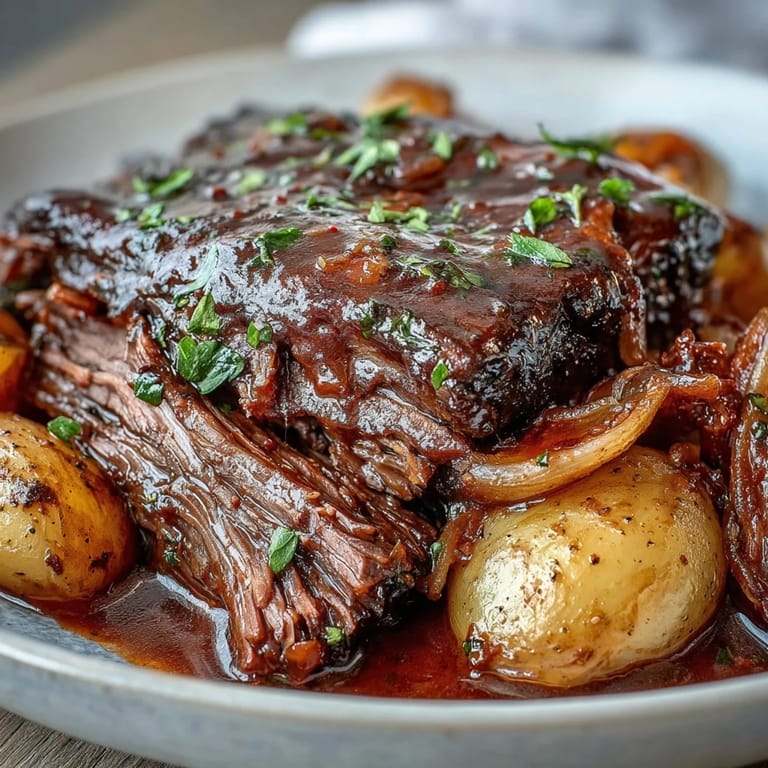
Save There was this one winter when I was feeling particularly homesick, and I decided to make pot roast on a Tuesday night just for myself. The apartment filled with that smell, and suddenly the city outside felt less lonely. Somewhere between the first tender bite and the last scrape of gravy off the plate, I realized that some recipes are not just about feeding yourself, they are about taking care of yourself.
The Slow Cooker Shortcut
On busy weekdays, I sear everything in the same pot, then transfer it all to the slow cooker and let it work its magic on low for 8 to 10 hours. Add the vegetables halfway through so they do not turn to mush. It is not quite the same as oven braising, but it still delivers that fork-tender beef that makes people ask when you are making it again.
Making It Your Own
Sometimes I swap half the beef broth for chicken broth if I want a lighter flavor, or add a splash of balsamic vinegar for brightness. My friend always throws in parsnips with the vegetables because her grandmother did it that way. Once you get the basic technique down, this recipe becomes a template rather than a rulebook.
Serving Suggestions
Crusty bread is non-negotiable for sopping up that gravy, but buttered egg noodles or mashed potatoes work just as well. A simple green salad with sharp vinaigrette cuts through the richness, and a glass of the same red wine you cooked with pulls everything together.
- Leftovers make incredible sandwiches on crusty bread with horseradish
- The gravy freezes beautifully for a quick weeknight meal base
- Serve over polenta for a completely different but equally comforting experience
 Save
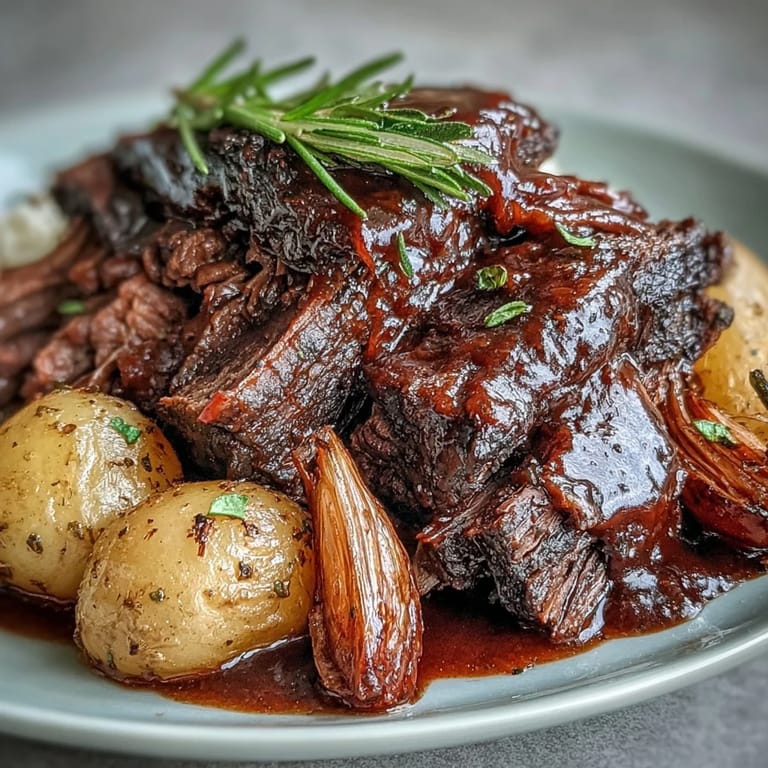
Save Pot roast is one of those dishes that proves good food does not have to be complicated, just patient. There is something deeply satisfying about a meal that takes care of itself while you go about your day, welcoming you home with the promise of comfort in every bite.
Recipe Questions & Answers
- → What cut of beef works best for pot roast?
Chuck roast or blade roast are ideal choices because they contain generous marbling and connective tissue. During slow cooking, this breaks down into gelatin, creating tender, succulent meat that falls apart easily.
- → Can I make this without red wine?
Absolutely. Substitute additional beef broth for the red wine. The dish will still develop rich flavor from proper searing, tomato paste, and fresh herbs, though the wine adds depth and complexity.
- → Why is searing the meat important?
Searing creates a caramelized crust through the Maillard reaction, adding hundreds of flavor compounds. These browned bits dissolve into the braising liquid, creating the deep, savory foundation of the gravy.
- → How do I know when the roast is done?
The beef is ready when it yields easily to a fork and shreds into chunks with minimal pressure. This typically takes 3-4 hours of gentle braising. The vegetables should be tender but holding their shape.
- → Can I thicken the gravy?
Yes. After removing the meat and vegetables, simmer the liquid and whisk in a cornstarch slurry (cornstarch mixed with cold water). Cook for 2-3 minutes until thickened, adding more broth if it becomes too dense.
- → Does this reheat well?
Pot roast reheats beautifully and often tastes better the next day as flavors continue to develop. Store in the refrigerator for up to 4 days, reheating gently in the gravy to maintain moisture.